In the era of global capital mobility, where finance serves as the “lifeblood” of the economy, an International Financial Center (IFC) is not merely a concentration of banks or investment institutions. Rather, it constitutes a distinct legal and institutional framework that reflects a country’s level of development and its degree of integration into the global financial market. A proper understanding of what an IFC is, how it operates in substance, and the legal implications arising therefrom is of particular importance to enterprises, investors, and policymakers alike.
The Nature of an International Financial Center (IFC)
By its nature, an International Financial Center is a concentrated financial–legal structure designed to facilitate financial transactions with a foreign element, including capital flows, currency transactions, securities, insurance, and derivative financial products.
An IFC does not emerge spontaneously; rather, it is the result of a deliberate national strategy, whereby the State proactively establishes:
- A legal environment conducive to international financial markets;
- An institutional space that allows for the testing and operation of advanced financial models; and
- A financial risk management mechanism at the macroeconomic level.
Accordingly, an IFC may be understood as a “point of convergence” between the State’s regulatory authority and the operational dynamics of the global financial market.
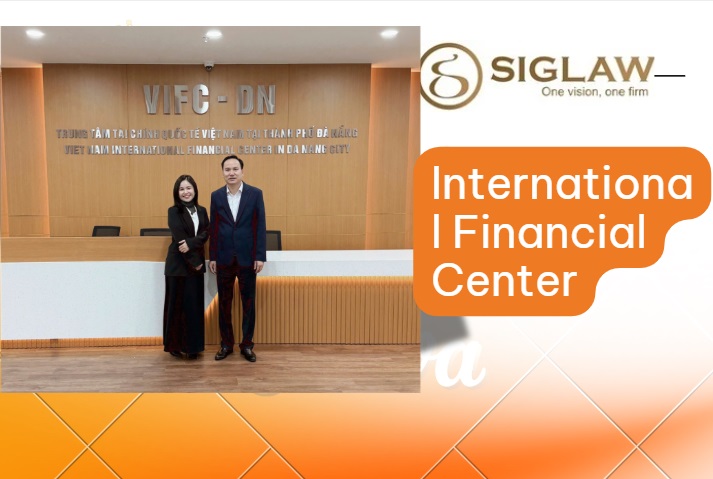
Distinguishing an IFC from a Domestic Financial Center
Not every financial center qualifies as an International Financial Center. The fundamental differences lie in the target participants served, the scope of influence, and the degree of legal openness.
| Criteria | Domestic Financial Center | International Financial Center (IFC) |
| Scope of operations | Primarily domestic | Cross-border |
| Primary participants | Domestic enterprises | Global financial institutions and investors |
| Legal framework | National laws and regulations | Aligned with international practices and standards |
| Degree of financial liberalization | Limited | High, subject to regulatory oversight |
From a legal perspective, an International Financial Center is typically granted a special regulatory regime that differs significantly from that applicable to the rest of the economy.
Core Operational Components of an International Financial Center (IFC)
An International Financial Center is not merely a location for the headquarters of banks; rather, it constitutes a comprehensive financial ecosystem, comprising the following:
Banking and International Financial Services
An IFC serves as a hub for multinational banks, investment banks, and specialized credit institutions, which engage in:
- International trade finance;
- Cross-border lending; and
- Foreign exchange trading and currency risk hedging instruments
Capital Markets and Investment Products
Within an IFC, the following markets are typically developed:
- Securities and international bond markets;
- Derivative products and sophisticated structured financial instruments; and
- Investment funds of substantial scale and high international participation.
Insurance, Reinsurance, and Risk Management
An IFC functions as a center for:
- The diversification and management of global financial risks; and
- The provision of specialized insurance solutions for international commercial activities.
Financial Technology and Innovation
In the contemporary context, an IFC is inseparable from:
- Fintech, digital banking, and intelligent payment systems; and
- The application of big data technologies and artificial intelligence in finance.
The Strategic Role of an International Financial Center (IFC) in the National Economy
The presence of an International Financial Center carries significance that extends well beyond the financial sector alone.
- First, an IFC serves as an efficient capital conduit, enabling the economy to access international financial resources at lower costs and with longer maturities.
- Second, an IFC contributes to enhancing national competitiveness, as the legal system and financial institutions are compelled to undergo reforms in order to meet international standards and best practices.
- Third, an IFC generates spillover effects across other sectors, including legal services, accounting, auditing, technology, and the development of a high-quality human resource base.
Key Legal Considerations for Enterprises Operating within an International Financial Center (IFC)
For enterprises and financial institutions, an International Financial Center presents both opportunities and legal challenges.
Accordingly, enterprises should:
- Clearly understand the licensing requirements and operational limitations;
- Establish and maintain robust internal compliance systems; and
- Proactively manage legal risks and cross-border risks.
Entering or operating within an IFC without adequate legal preparedness may result in serious consequences, ranging from administrative sanctions to prolonged international disputes.
Siglaw Law Firm’s Perspective
Based on its practical experience in advising on investment projects and financial activities involving foreign elements, Siglaw is of the view that an International Financial Center represents an inevitable development model, yet one that can only succeed when built upon a solid and consistent legal foundation.
Enterprises seeking to capitalize on the advantages of an IFC should have in place:
- A long-term legal strategy; and
- The support of legal advisors with in-depth expertise in both domestic law and international financial practices.
Siglaw Law Firm provides comprehensive legal advisory services in relation to investment, international finance, licensing, regulatory compliance, and dispute resolution within the International Financial Center environment.
For specific legal consultation, please contact Siglaw Firm for the most prompt and comprehensive assistance:
Head Office in Hanoi: No. 44/A32 – NV13, Area A Geleximco, Le Trong Tan Street, Tay Mo Ward, Hanoi, Vietnam.
Email: vphn@siglaw.com.vn
Southern Branch: No. 103 – 105 Nguyen Dinh Chieu Street, Xuan Hoa Ward, Ho Chi Minh City, Vietnam.
Email: vphcm@siglaw.com.vn
Central Branch: VIFC DN – ICT Building, Software Park No. 2, Nhu Nguyet Street, Hai Chau Ward, Da Nang, Vietnam.
Email: vphcm@siglaw.com.vn
Hotline: 0961 366 238
Facebook: https://www.facebook.com/hangluatSiglaw