As Vietnam continues to open its doors to global integration and becomes an increasingly attractive destination for experts, investors, entrepreneurs, and international visitors, the demand for visas for foreigners in Vietnam has grown significantly. A visa is not only an entry permit — it is a “legal passport” that determines a foreigner’s purpose of stay, the right to remain, and the ability to conduct lawful activities within Vietnam.
Therefore, understanding Vietnam’s visa regulations, visa classifications, and application procedures is essential to ensure lawful entry and residence, avoid unnecessary risks, and minimize the chance of rejection or administrative penalties.
This article, developed by Siglaw, provides a comprehensive – up-to-date – legally accurate 2025 guide to help individuals and businesses gain a complete understanding of Vietnam’s visa procedures for foreigners, including issuance, extension, conversion, and applicable fees.
Definition of Vietnam Visa for Foreigners – Legal Basis
A Vietnam visa (thị thực) is an official permit issued by the Immigration Department under the Ministry of Public Security, or by Vietnamese diplomatic missions abroad, allowing a foreigner to enter, stay, and exit Vietnam within a prescribed period and for a lawful purpose.
Key legal foundations include:
- Law No. 47/2014/QH13 on Entry, Exit, Transit, and Residence of Foreigners in Vietnam
- Law No. 51/2019/QH14 amending and supplementing certain provisions
- Decree 152/2020/NĐ-CP (foreign labor in Vietnam)
- Decree 144/2021/NĐ-CP (administrative penalties in security & order, including residence violations)
- Guiding circulars of the Ministry of Public Security
A visa specifies:
- Purpose of entry
- Visa validity
- Number of entries
- Visa issuing authority (Embassy, airport, e-visa system)
This is a mandatory permit for most international nationals who wish to enter Vietnam for tourism, family visits, employment, investment, or business activities.
New Regulations on Vietnam Visas for Foreigners – 2025 Update
From 2025, Vietnam’s visa policies include several adjustments to facilitate foreign entry while ensuring strict immigration control:
- E-visa validity extended to up to 90 days, applicable for both single and multiple entries.
- Expansion of eligible nationalities permitted to apply for e-visas, simplifying access for citizens of many European, Asian, and American countries.
- Online submission and digital signature acceptance, allowing applicants to track results electronically instead of applying only in person.
- Certain tourist visas may now be extended within Vietnam, eliminating the previous requirement to exit the country.
- Sponsoring enterprises must provide transparent information and bear responsibility for foreigners they invite.
These updates offer greater convenience for foreigners and reduce administrative workload, ensuring a more transparent and streamlined immigration process.
Types of Vietnam Visas for Foreigners – Classification by Entry Purpose
Vietnam issues various visa types depending on the applicant’s purpose of entry. Identifying the correct visa type is crucial to avoid misclassification, which may result in rejection or penalties.
Common visa types:
| Visa Code | Visa Type
Purpose |
Eligible Applicant |
| DL | Tourist visa | Tourist visa |
| DN1 | Business visa | Working or cooperating with Vietnamese enterprises |
| LĐ1, LĐ2 | Work visa | Foreign employees with or without a work permit requirement |
| ĐT1 – ĐT4 | Investor visa | Foreign investors classified by investment capital |
| TT | Dependent visa | Visiting relatives in Vietnam |
| EV | E-visa | Online application, up to 90 days |
| NN1 – NN3 | International organization visa | Working with foreign NGOs or international bodies |
| DH | Study visa | Studying, research, academic programs |
Each visa type has different conditions, validity periods, and application procedures; therefore choosing the correct category from the beginning ensures faster processing and reduces legal risks.
How to Apply for Vietnam E-Visa (Online Visa) – Fastest Method in 2025
Among all visa options, the e-visa (EV) is the simplest, fastest, and most cost-efficient method for foreigners.
E-visa application includes three steps:
Step 1 – Access the official e-visa portal:
https://evisa.xuatnhapcanh.gov.vn
Step 2 – Complete the form and upload documents:
- Passport photo
- Portrait photo
Select entry purpose
Choose entry point and intended period of stay
Step 3 – Pay the visa fee and wait for processing:
Fee: 25–50 USD
Processing time: 3–5 working days
Results delivered via email
E-visas are ideal for tourism, short-term business trips, or activities not requiring enterprise sponsorship.
Vietnam Visa for Foreigners Working in Vietnam – Lawful Procedure
To work legally in Vietnam, foreigners must hold the appropriate work visa (LĐ1, LĐ2), along with either:
A valid work permit, or Certification of exemption from work permit requirements
Conditions to obtain a work visa:
- A sponsoring enterprise or organization in Vietnam
- Passport valid for at least 6 months
- Valid work permit
Complete legal documentation from the sponsoring entity
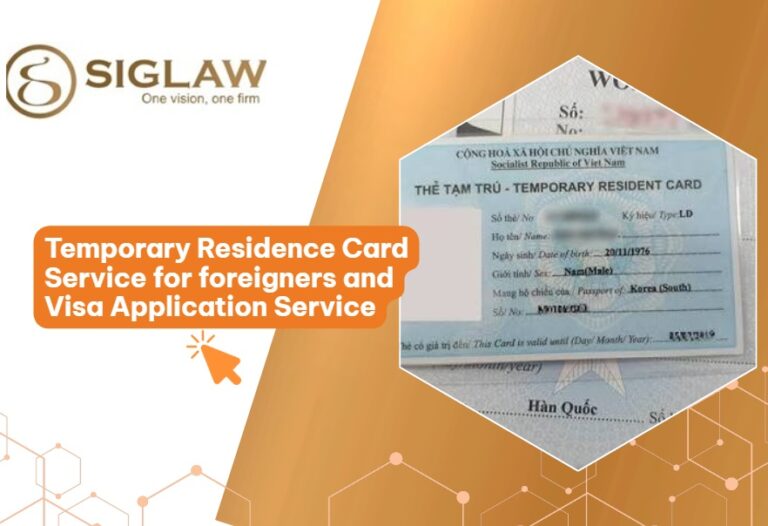
Work visas typically have up to 12 months validity and may be converted into a Temporary Residence Card (TRC) for long-term employment.
3-Month Multiple-Entry Visa – Flexible Option for Experts & Investors
A 3-month multiple-entry visa allows foreigners to enter and exit Vietnam repeatedly within 90 days. This visa is commonly used by:
- Foreign specialists on frequent business trips
- Investors managing ongoing projects in Vietnam
- Individuals visiting family in Vietnam
Conditions:
- Invitation letter or approval letter (for business/work purposes)
- Valid passport
- Clear documentation of entry purpose
This visa may apply to DN1, DN2, LĐ visas or certain eligible e-visas.
Visa Fees & Entry Approval Letter Fees for Foreigners
Visa fees depend on:
- Visa type
- Number of entries
- Visa issuing location (Embassy, airport, e-visa)
Standard visa fees:
- Single-entry visa: ~25 USD
- 3-month multiple-entry visa: ~50 USD
- Visa on arrival (airport): 25–135 USD
- Investment / dependent visa: 35–155 USD
Entry approval letter fees (for sponsored visas):
- Tourist approval letter: 20–80 USD
- Business / work approval letter: 50–150 USD
A complete, lawful, and valid dossier, especially when sponsored by an enterprise increases the likelihood of fast processing and reduces the chance of rejection.
When Should You Use a Professional Vietnam Visa Service?
Visa procedures can be more complicated than expected, especially for business, labor, or previously rejected cases. Thus, using a specialized legal service is optimal when you:
- Need urgent visa processing (within 1–3 days)
- Are unfamiliar with the procedure
- Lack sponsorship or required documents
- Have unclear immigration history
- Wish to minimize risk of rejection
- Prefer full-service handling from A–Z
Siglaw provides:
- Advice on choosing the correct visa
- Drafting invitation letters and approval requests
- Filing – tracking – obtaining results on behalf of clients
- Visa extension, conversion, and TRC assistance
- Guidance for enterprises on lawful use of foreign workers
A Vietnam visa is not merely an entry permit, it is a crucial legal foundation allowing foreigners to live, work, invest, and travel lawfully in Vietnam. By understanding visa categories, legal regulations, and application procedures, individuals and enterprises can save time, minimize risks, and ensure full compliance with Vietnamese law.
If you or your business need assistance with fast, lawful, and risk-free Vietnam visa services, Siglaw is always ready to support you.
Head Office in Hanoi: No. 44/A32 – NV13, Area A Geleximco, Le Trong Tan Street, Tay Mo Ward, Hanoi, Vietnam.
Email: vphn@siglaw.com.vn
Southern Branch: No. 103 – 105 Nguyen Dinh Chieu Street, Xuan Hoa Ward, Ho Chi Minh City, Vietnam.
Email: vphcm@siglaw.com.vn
Central Branch: VIFC DN – ICT Building, Software Park No. 2, Nhu Nguyet Street, Hai Chau Ward, Da Nang, Vietnam.
Hotline: 0961 366 238
Facebook: https://www.facebook.com/hangluatSiglaw