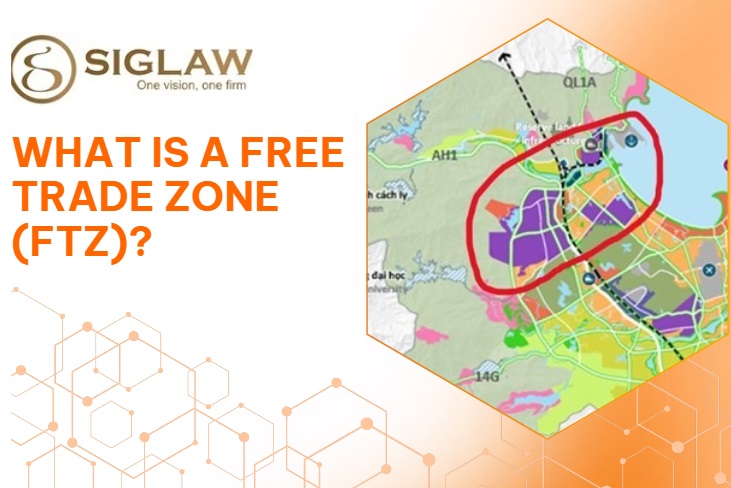
A Free Trade Zone (FTZ) is a special economic model established by many countries to promote the circulation of goods, services, and investment through the application of flexible management mechanisms and preferential policies that are more favorable than those under general law. In the context of deep international economic integration, FTZs are regarded as an important institutional tool for enhancing national competitiveness and participating effectively in global value chains.
Concept of a Free Trade Zone (FTZ)
From a legal–economic perspective, a Free Trade Zone (FTZ) may be understood as a territorial area or economic space established by the State under a special legal regime, within which commercial, service, logistics, and investment activities are organized on the basis of a higher degree of liberalization compared to the rest of the economy.
Unlike traditional industrial zones or export processing zones, FTZs are not limited to export-oriented manufacturing activities but also encompass goods trading, service provision, distribution, logistics, transshipment, re-export, and other international trade–supporting activities. The legal framework governing FTZs is typically associated with the simplification of customs procedures, the relaxation of market access barriers, and the application of preferential tax and fee policies.
In essence, an FTZ is a deliberate policy instrument that allows the State to pilot new trade and investment management mechanisms within a controlled space, thereby drawing lessons for broader institutional reforms.
Legal and Economic Characteristics of a Free Trade Zone
First, the distinctiveness of the legal and state management regime is a defining feature of FTZs. Within these zones, regulations on customs, import and export, specialized inspections, and investment procedures are often simplified, reducing compliance time and costs for enterprises.
Second, FTZs exhibit a high level of openness to international trade and investment. Goods may be brought into, stored, processed, re-exported, or transshipped within the FTZ without, or with only limited, customs duties until they are introduced into the domestic market. At the same time, foreign investors are generally granted more favorable market access conditions in FTZs than in areas outside the FTZ.
Third, FTZs are commonly associated with tax incentives and preferential trade policies. These incentives not only reduce the financial burden on enterprises but also serve as drivers for attracting investment capital, advanced technology, and modern management practices.
Fourth, although designed to promote liberalization, FTZs remain subject to strict supervision and risk management mechanisms to ensure economic security, trade order, and compliance with international commitments on trade remedies, anti-smuggling measures, and the prevention of origin fraud.
Role of Free Trade Zones in Economic Development
First and foremost, FTZs play a role in promoting international trade and economic integration by creating a favorable business environment, reducing transaction costs, and improving the efficiency of goods circulation. This is a key factor enabling countries to integrate more deeply into global supply chains and value chains.
Second, FTZs contribute to attracting both domestic and foreign investment, particularly in logistics, distribution, processing, and trade-supporting services. The concentration of enterprises within FTZs generates spillover effects in terms of technology transfer, management practices, and workforce skills.
Third, FTZs serve as a catalyst for institutional reform in trade and investment. By piloting new management models, the State can gradually improve the general legal framework and enhance the effectiveness and efficiency of state management over commercial activities.
Finally, FTZs contribute to regional economic development and the restructuring of economic space, especially in areas with advantages such as seaports, border gates, airports, or logistics hubs, thereby promoting sustainable growth.
Legal Issues Arising in the Development of Free Trade Zones
The establishment and operation of FTZs impose high requirements for the coherence and transparency of the legal framework. If not properly designed, the special mechanisms of FTZs may lead to legal conflicts, overlapping regulatory authority, or risks of budget revenue losses.
In addition, FTZs may be vulnerable to abuse for smuggling, trade fraud, illegal transshipment, or circumvention of trade remedy measures. Therefore, striking a balance between trade liberalization and the maintenance of legal order is a critical requirement.
Conclusion
Free Trade Zones (FTZs) are an important institutional model in the development and economic integration strategies of many countries. When properly designed and implemented, FTZs not only promote trade and attract investment but also serve as effective policy-testing spaces that contribute to the improvement of the economic legal system. However, for FTZs to play a positive and sustainable role, a clear legal framework, transparent management mechanisms, and close coordination among competent state authorities are essential.
For detailed consultation, please contact Siglaw Firm:
Head Office in Hanoi: No. 44/A32 – NV13, Area A Geleximco, Le Trong Tan Street, Tay Mo Ward, Hanoi, Vietnam.
Email: vphn@siglaw.com.vn
Southern Branch: No. 103 – 105 Nguyen Dinh Chieu Street, Xuan Hoa Ward, Ho Chi Minh City, Vietnam.
Email: vphcm@siglaw.com.vn
Central Branch: VIFC DN – ICT Building, Software Park No. 2, Nhu Nguyet Street, Hai Chau Ward, Da Nang, Vietnam.
Hotline: 0961 366 238
Facebook: https://www.facebook.com/hangluatSiglaw