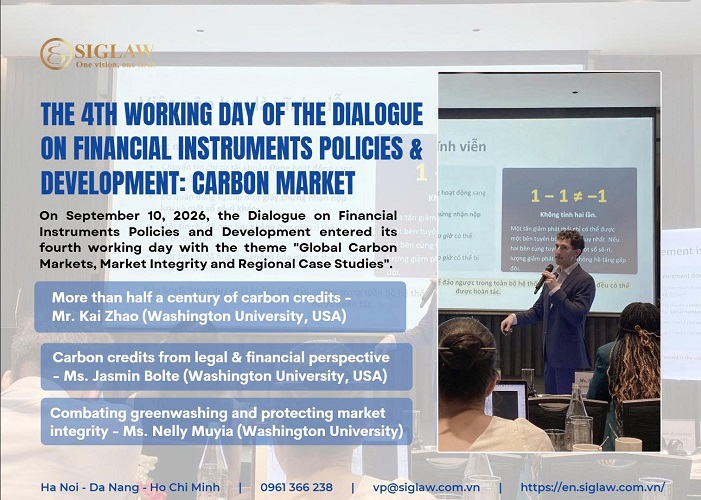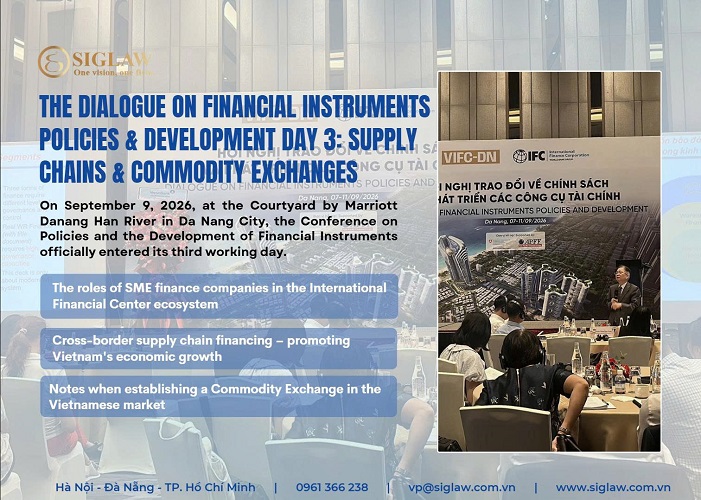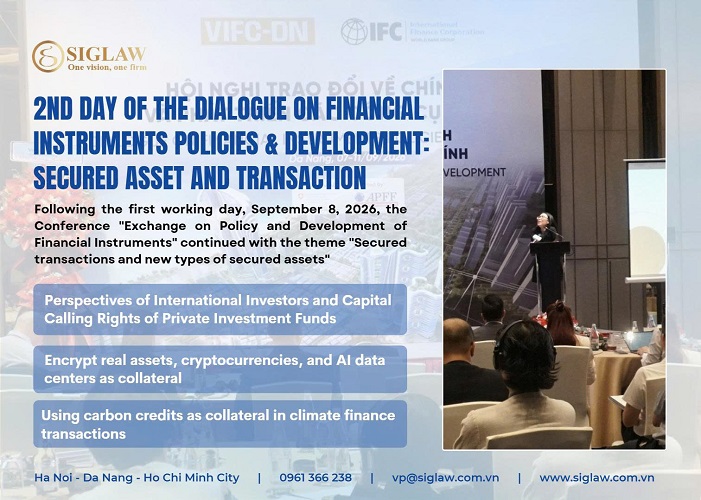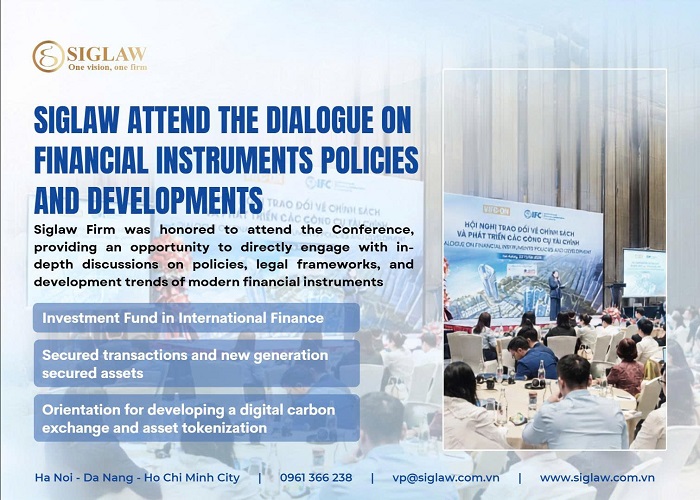
In the context of globalization, International Financial Centres (IFCs) serve as legal “anchors” for cross-border capital flows. Choosing an appropriate business model within an IFC requires a thorough understanding of corporate law as well as tax regimes and double taxation avoidance agreements (DTAAs).
In Vietnam, amid deepening international economic integration, the Government is progressively studying and orienting the development of International Financial Centres in Ho Chi Minh City and Da Nang, with the aim of enhancing Vietnam’s position in the regional and global financial value chain.
Overview of International Financial Centres (IFCs)
An International Financial Centre (IFC) is a geographically and legally distinct jurisdiction established by a country or territory to attract financial institutions, multinational enterprises, investment funds, and professional financial service providers. IFCs typically operate under a separate legal framework, relatively detached from the domestic legal system, particularly in the areas of corporate law, financial and banking regulation, taxation, foreign exchange control, and dispute resolution.
Common Legal Characteristics of Enterprises in IFCs
Enterprises established within IFCs possess legal characteristics that differ significantly from those operating within ordinary national territories, including:
- Application of IFC-specific laws (IFC Law), with many centres permitting the direct application of common law;
- Liberalized investment and ownership regimes, allowing 100% foreign ownership;
- Preferential policies on taxation, foreign exchange, and profit repatriation;
- Independent court and arbitration mechanisms.
Common Business Models in International Financial Centres
Financial Services Companies
a) Legal Basis
In the DIFC, this model is governed by the DIFC Companies Law and supervised by the Dubai Financial Services Authority (DFSA). Enterprises must be licensed according to their activities, such as banking, securities, asset management, or fintech.
Relevant Vietnamese legal references include:
- Law on Credit Institutions;
- Law on Investment 2020;
- Law on the State Bank of Vietnam 2010.
b) Legal Characteristics
- High minimum capital requirements, depending on risk exposure;
- Strict compliance obligations regarding anti-money laundering (AML) and counter-terrorism financing (CTF);
- Subject to independent supervision by IFC financial regulators.
c) Practical Example
In Singapore, international banks such as HSBC and Citibank operate within the Singapore Financial Centre under licenses issued by the Monetary Authority of Singapore (MAS). Vietnam may refer to this model to allow international banks to establish regional headquarters in the Ho Chi Minh City IFC.
Fund Management Companies and Investment Funds
a) Legal Basis
This model is regulated by the Financial Services and Markets Regulations (FSMR), ADGM Funds Rules, and securities laws.
b) Application Orientation for Vietnam’s IFC
- Permitting the establishment of investment funds based on international practices (e.g. Limited Partnerships);
- Legal separation between fund management companies and funds;
- English-language reporting and adoption of IFRS standards;
- Investor protection mechanisms aligned with international standards;
- Flexible capital structures and investment strategies.
c) Practical Example
At the Abu Dhabi Global Market (ADGM), investment funds can be established within 5–10 working days. Vietnam could pilot a similar mechanism within its IFCs to attract international capital flows.
Holding Companies
a) Purpose of Establishment
Holding companies in IFCs are commonly used to:
- Hold equity interests in subsidiaries across multiple jurisdictions;
- Optimize tax and corporate governance structures;
- Conduct cross-border M&A transactions.
b) Legal Characteristics
- Do not engage in direct business operations;
- Eligible for corporate income tax exemptions or reductions on dividends and capital gains;
- Recognized as a distinct corporate form;
- Permitted to manage capital flows across borders.
However, Vietnamese law currently lacks a dedicated legal framework for holding companies, which limits the country’s ability to attract multinational groups.
c) Practical Example
Many multinational corporations establish holding companies in Singapore or DIFC to hold investments across Southeast Asia
Fintech and Financial Innovation Companies
a) Purpose of Establishment
IFCs often establish regulatory sandboxes allowing fintech companies to:
- Test innovative products;
- Benefit from conditional exemptions from certain legal requirements.
b) Characteristics
- Expanded sandbox regimes for fintech, blockchain, and digital assets;
- Permission to pilot new financial products on a limited scale;
- Conditional legal exemptions.
c) Illustrative Example
The DIFC FinTech Hive (UAE) is a successful sandbox model that Vietnam may reference when building a fintech ecosystem within its IFCs.
Professional Service Firms in IFCs
a) Common Types
- International law firms;
- Audit firms;
- Financial, tax, and risk management consulting firms.
b) Characteristics
- Application of international professional standards;
- Operation under IFC-specific licenses;
- Permission to provide cross-border services.
International Legal and Financial Service Enterprises
Orientation:
- Permitting foreign law firms to advise on international law, foreign law, and IFC law;
- Application of international professional standards;
- Allowing dispute resolution through international arbitration within the IFC.
Limited Liability Companies (Ltd / Pte Ltd)
This is the most common model, favored by fintech startups and investment funds due to its independent legal personality.
- Legal characteristics: Shareholders’ liability is limited to their capital contributions. Share transfers are flexible, facilitating multi-round fundraising.
- Legal basis: Typically derived from the UK Common Law system.
- Practical example: Fintech companies in Singapore often register as Private Limited Companies to benefit from tax incentives under the Tax Exemption Scheme for New Start-Up Companies
Relevance to Vietnam
The establishment of IFCs in Vietnam requires:
- Enactment of a dedicated law or resolution governing IFCs;
- Pilot implementation of a flexible legal system with access to common law principles;
- Establishment of independent, English-language dispute resolution mechanisms;
- Development of business models aligned with international practices while safeguarding national legal sovereignty.
Business models in International Financial Centres represent a synthesis of legal liberalization and stringent risk governance. The study, selection, and domestication of these models are crucial to a country’s financial competitiveness in a globalized environment. The choice of business model should be based not only on capital scale but also on exit strategies and compliance obligations related to AML and CTF in the host jurisdiction.
Before executing incorporation documents, enterprises should conduct comprehensive legal due diligence on the compatibility between IFC laws and the laws of jurisdictions where capital is actually deployed.
Please contact Siglaw for in-depth consultation on suitable business models.
For detailed consultation, please contact Siglaw Firm:
Head Office in Hanoi: No. 44/A32 – NV13, Area A Geleximco, Le Trong Tan Street, Tay Mo Ward, Hanoi, Vietnam.
Email: vphn@siglaw.com.vn
Southern Branch: No. 103 – 105 Nguyen Dinh Chieu Street, Xuan Hoa Ward, Ho Chi Minh City, Vietnam.
Email: vphcm@siglaw.com.vn
Central Branch: VIFC DN – ICT Building, Software Park No. 2, Nhu Nguyet Street, Hai Chau Ward, Da Nang, Vietnam.
Hotline: 0961 366 238
Facebook: https://www.facebook.com/hangluatSiglaw