The establishment and operation of enterprises in Vietnam’s International Financial Centre (IFC) not only provide access to a global financial environment but also offer a special tax regime with incentives that are significantly more competitive than those applied outside the IFC.
Pursuant to Resolution No. 222/2025/QH15 of the National Assembly, the tax framework applicable to enterprises in the IFC is designed to be competitive, stable, and aligned with international standards, with the aim of attracting global investors, financial institutions, and multinational enterprises.
Corporate Income Tax (CIT)
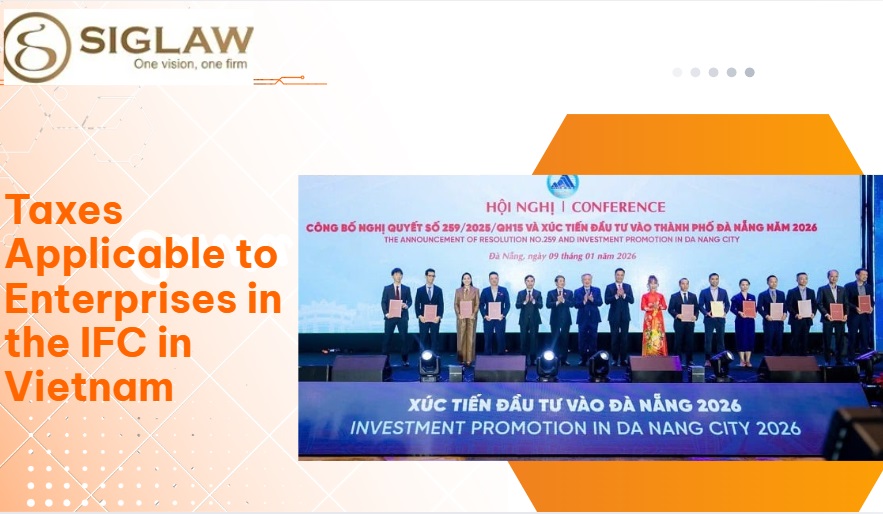
Corporate Income Tax is the core tax applicable to enterprises operating within the IFC. Enterprises established and operating in the IFC are entitled to special CIT incentives, including:
- A preferential CIT rate of 10% for a period of up to 30 years for projects in prioritized sectors and industries;
- CIT exemption for up to 4 years from the first year taxable income is generated;
- A 50% reduction of payable CIT for the subsequent 9 years;
- For projects not falling within prioritized sectors, a preferential CIT rate of 15% for 15 years, together with applicable tax exemption and reduction mechanisms.
These long-term incentives significantly reduce the tax burden and create a clear competitive advantage for IFC-based enterprises compared to conventional investment locations in Vietnam and the region.
Personal Income Tax (PIT)
In addition to CIT, Personal Income Tax (PIT) incentives in the IFC are considered among the most attractive features, particularly for enterprises employing high-level professionals. Under the current regulations:
- PIT exemption until the end of 2030 applies to income from salaries and wages of experts, managers, scientists, and high-quality human resources working in the IFC;
- PIT exemption on income from the transfer of shares, capital contributions, and capital contribution rights arising within the IFC, subject to eligibility conditions.
These policies enable IFC enterprises to attract and retain international talent while significantly reducing personnel costs during the initial stages of operation.
Export and Import Taxes
With respect to import and export activities, enterprises operating in the IFC benefit from various facilitative mechanisms:
- Goods and services directly serving IFC operations may enjoy preferential tax rates under international treaties to which Vietnam is a signatory;
- Simplified and flexible customs procedures, tailored to cross-border financial and investment activities;
- Enhanced facilitation in the circulation of goods, equipment, and facilities necessary for business operations.
Such incentives are particularly suitable for enterprises in the financial, fintech, technology, and international investment service sectors.
Value Added Tax (VAT)
Value Added Tax applicable to IFC enterprises follows the general principles of Vietnam’s tax laws; however:
- Certain financial, banking, and investment services may be non-VATable or subject to preferential VAT treatment;
- International financial transactions conducted within the IFC may be subject to tax mechanisms aligned with international practices, minimizing the risk of double taxation.
This approach helps reduce transaction costs and improve operational efficiency for IFC enterprises.
Other Tax Obligations and Special Tax Administration Mechanisms
In addition to the taxes mentioned above, enterprises operating in the IFC are still required to fulfill other tax obligations in accordance with applicable regulations, such as contractor tax (where applicable) and sector-specific fees and charges. However, enterprises in the IFC benefit from:
- A flexible and transparent tax administration mechanism;
- Simplified procedures for tax declaration and payment;
- A stable and predictable legal environment, particularly suitable for long-term investors.
The tax regime applicable to enterprises in Vietnam’s International Financial Centre (IFC) is designed to be preferential, competitive, and aligned with international standards. With significant incentives relating to corporate income tax, personal income tax, export–import taxes, and special tax administration mechanisms, the IFC offers substantial advantages for enterprises operating in finance, investment, fintech, and international financial services.
Siglaw Firm provides comprehensive legal advisory services on taxation and investment for enterprises establishing and operating in the IFC, including advice on tax incentives, investment structuring, and regulatory compliance in accordance with Resolution No. 222/2025/QH15 and relevant legal regulations.
Contact us today for an initial free consultation with Siglaw’s experienced legal professionals.
Head Office in Hanoi: No. 44/A32 – NV13, Area A Geleximco, Le Trong Tan Street, Tay Mo Ward, Hanoi, Vietnam.
Email: vphn@siglaw.com.vn
Southern Branch: No. 103 – 105 Nguyen Dinh Chieu Street, Xuan Hoa Ward, Ho Chi Minh City, Vietnam.
Email: vphcm@siglaw.com.vn
Central Branch: VIFC DN – ICT Building, Software Park No. 2, Nhu Nguyet Street, Hai Chau Ward, Da Nang, Vietnam.
Email: vphcm@siglaw.com.vn
Hotline: 0961 366 238
Facebook: https://www.facebook.com/hangluatSiglaw