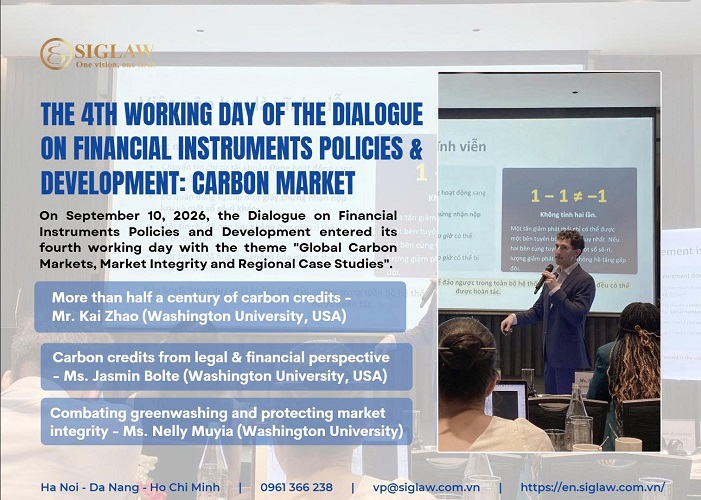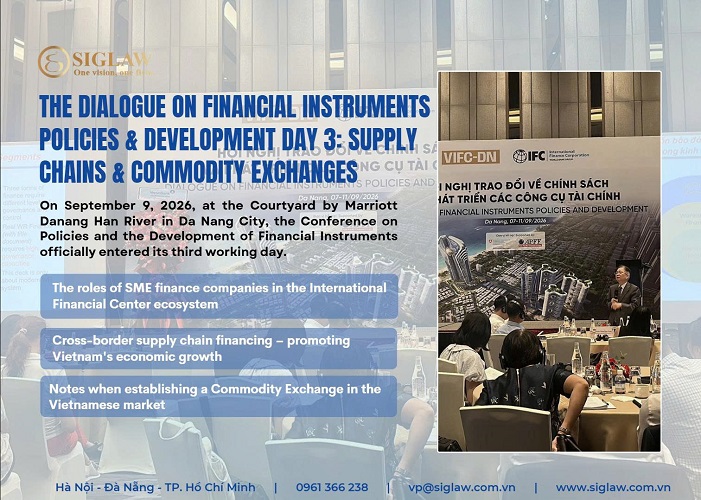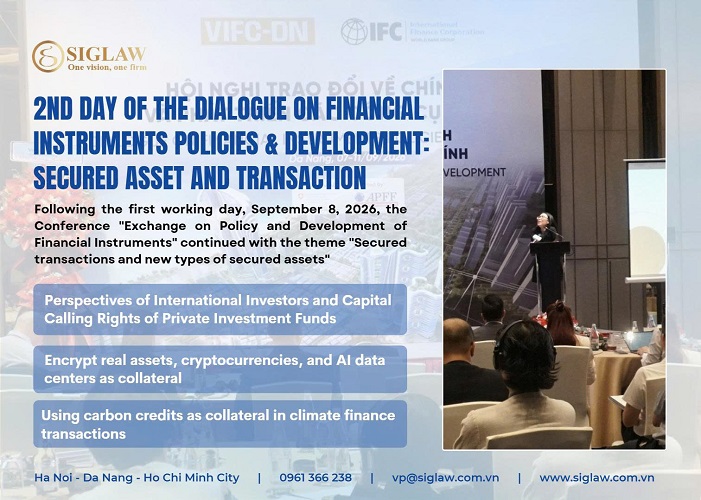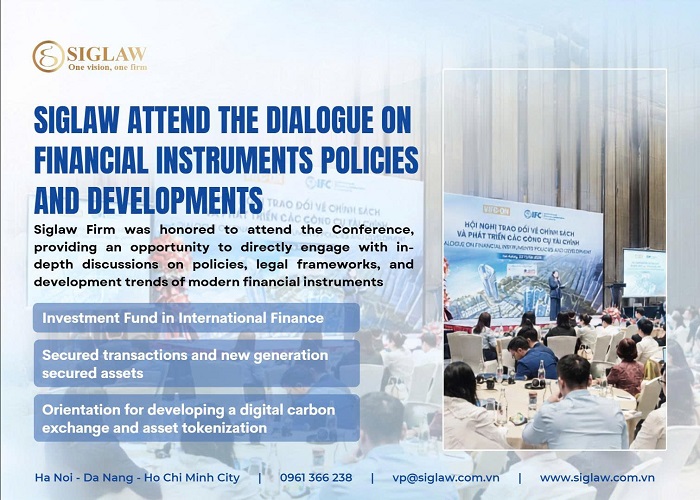
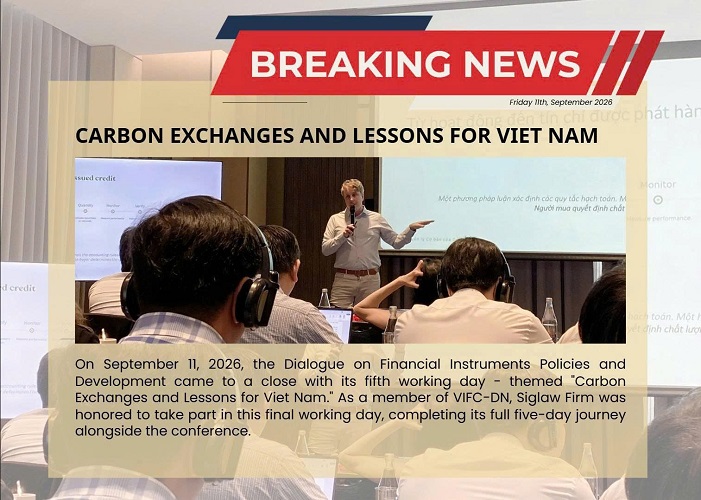
On September 11, 2026, the Dialogue on Financial Instruments Policies and Development came to a close with its fifth working day – themed “Carbon Exchanges and Lessons for Viet Nam.” As a member of VIFC-DN, Siglaw Firm was honored to take part in this final working day, completing its full five-day journey alongside the conference.
Fundamental principles and opportunities of a carbon project
Opening the working day, Dr. Kyle Holland – Founder of eCarbon and Impact Inside – delivered two consecutive presentations on the foundations of carbon projects: What makes a carbon project substantive, credible, and capable of attracting capital?
Dr. Kyle Holland analyzed the difference between the two forms of credit generation – avoided loss and active removal – along with the risks commonly encountered in technology-based carbon removal. One key point that Dr. Kyle Holland emphasized repeatedly: a carbon credit is a claim based on a counterfactual scenario, and therefore additionality, permanence, and a simple, credible baseline are what determine a project’s true value — rather than merely chasing the number of credits issued.
Notably, Dr. Kyle Holland devoted a dedicated segment to analyzing the group of technology-based carbon removal solutions – such as biochar, bioenergy with carbon capture and storage (BECCS), enhanced rock weathering (ERW), and direct air carbon capture and storage (DACCS). In his view, this group of solutions has a simple baseline and a very high degree of additionality, since it would scarcely occur without the project; in return, however, it faces a considerably more difficult economic equation: large capital investment, high energy and input costs, and long-term carbon storage liability – factors that project developers need to weigh carefully before selecting a technology suited to actual conditions in Vietnam.
The following presentation placed carbon projects within the market context of 2026: demand still exists, but buyers are increasingly demanding, and only a small proportion of purchase inquiries convert into actual transactions. Dr. Kyle Holland provided an update on Vietnam’s carbon market development roadmap under current legal regulations (Decision No. 232/QD-TTg and Decree No. 29/2026/ND-CP), as well as the mechanism for connecting Vietnam with the Singapore market. The overarching message for project developers in Vietnam was to “design backward from the market” – that is, to clearly identify buyer demand before beginning to build a project.
This content carries high practical significance for the Vietnamese market, as a growing number of domestic enterprises and investors are interested in developing carbon projects – from afforestation and sustainable agriculture to renewable energy – yet still lack information on how to assess a project’s feasibility and capital-raising potential before implementation.
Dr. Kyle Holland also emphasized the role of measurement, reporting, and verification (MRV) throughout a project’s entire life cycle – from establishing the baseline and determining additionality, through to monitoring reversal risk and long-term carbon storage liability. For project developers in Vietnam, these are key criteria that need to be built in right from the project design stage, rather than added after the project has already entered operation.
Before committing resources to formal project design documentation, Dr. Kyle Holland also introduced a rapid screening method comprising eight groups of questions: project definition, the carbon thesis, scale, rights and stakeholders, methodology, the commercial equation, principal risks, and matters requiring further due diligence. This method helps project developers arrive early at one of three decisions: proceed to a feasibility study, redesign, or stop before incurring further costs.
Building a successful digital carbon exchange
Continuing the conference in the afternoon, Mr. Diego Soto-Eisenberg, from the University of Washington (USA), presented on how to build a successful digital carbon exchange, resting on two inseparable pillars: the technology platform and the legal system.
On the technology side, Mr. Diego Soto-Eisenberg introduced the five core functions an exchange must perform – from registration, custody, and order matching through to settlement and market data disclosure – while comparing the cost equation between leasing an existing platform and building one from scratch. Mr. Diego Soto-Eisenberg offered specific figures to illustrate this strategic choice: leasing or acquiring an existing trading platform entails a five-year cost of ownership in the range of USD 17 – 33 million and can go live in as little as 6 – 12 months; whereas building an exchange from the ground up on domestic infrastructure can cost up to USD 52 million, take 2 – 3 years before the first transaction, and require maintaining a team of more than 20 engineers, all without any guarantee that buyer demand will be in place.
This comparative cost perspective across exchange development options serves as useful reference data for policymakers in Vietnam as they refine the infrastructure for both the domestic and international carbon markets, particularly as VIFC is progressively taking shape.
On the legal side, the presentation raised foundational questions that Vietnam’s legal framework needs to answer: What kind of asset is a carbon credit? How are ownership rights established? And when is a carbon transaction deemed complete?
One intriguing point shared by Mr. Diego Soto-Eisenberg was the parallel between selling carbon credits and selling works of art: uniqueness, privacy in transactions, and the story behind the product’s origin can all become factors determining the price a buyer is willing to pay. Accordingly, a carbon project seeking to command a good price needs to combine both the “head” – robust measurement and verification mechanisms – and the “heart,” namely an authentic, accessible story about the benefits the project delivers to the community.
The presentation also analyzed the differences in legal requirements between selling carbon credits domestically (the compliance market) and selling internationally (the voluntary market). While domestic transactions can rely on direct inspection and supervision by regulatory authorities, international transactions demand a far more rigorous set of legal rules, such as: the right to license credit exports, commitments against double counting of the same ton of carbon, and a public registry system that foreign investors can also consult. These are issues that Vietnam’s legal framework will need to continue refining in the period ahead so that domestic carbon credits gain international market recognition and trade at commensurate prices.
Positioning Da Nang as a hub for an integrity carbon market
The presentation delivered online via Zoom by speaker Cole Davis – Founder and CEO of Hanaper – offered an overview of the technological infrastructure for an integrity carbon market. The speaker pointed out that most carbon credit failures – such as manipulated additionality or baseline distortion – typically occur before a credit reaches the exchange, and therefore faster trading technology cannot remedy a credit that was of poor quality from the outset.
The solution introduced by speaker Cole Davis is the “carbon credential” – a model that is at once a legal instrument and a cryptographic credential attached to each individual credit, enabling any buyer, auditor, or international counterparty to verify it independently without relying on a single registry system. This is regarded as an infrastructure layer capable of serving both the domestic carbon market and the international market that the Da Nang International Financial Center is working to build.
Speaker Cole Davis described in concrete terms the structure of a carbon credential: each credit carries with it complete layers of evidence – issuance standard certification, baseline studies, validation body reports, satellite monitoring data, verification audit reports, and the issuer’s digital signature held within the credit itself rather than scattered across multiple separate documents. In the speaker’s view, every assertion made about a carbon credit can be traced back to the party that made it, across the credit’s entire life cycle: from design, validation, and verification through to issuance, trading, and retirement. This addresses precisely the “bottleneck” of trust that earlier generations of digital carbon technology, such as registries or blockchain alone, have yet to fully resolve.
The presentation also surveyed several international precedents for nationwide cryptographic identity platforms already in actual operation – from the global legal entity identifier system GLEIF, to national and state-level models in Bhutan, Utah, and British Columbia (Canada) – demonstrating that this technological direction is no longer theoretical but has a proven basis for implementation, offering points of reference for Vietnam as it builds the digital infrastructure for VIFC-DN.
Another notable topic was the current institutional picture of Vietnam’s carbon market: the domestic market now has a clear division of responsibilities among regulatory agencies under Decree No. 29/2026/ND-CP, while the international market at VIFC-DN – where Vietnam’s high-quality credits could command higher prices – is still being designed under Decree No. 112/2026/ND-CP and the regulatory sandbox mechanism in Da Nang. Speaker Cole Davis argued that the technological credential layer could serve both markets simultaneously, saving on infrastructure development costs and shortening the timeline for bringing VIFC-DN into actual operation.
Climate finance and carbon finance
Before closing out the fifth working day and the conference as a whole, Professor Xuan-Thao Nguyen – Pendleton Miller Professor of Law and Director of the Asian Law Center, University of Washington – delivered a concluding presentation on climate finance and carbon finance.
Opening her presentation, Professor Xuan-Thao Nguyen cited the definition of climate finance used by many international organizations: climate finance refers to financial resources directed toward reducing emissions, enhancing greenhouse gas sequestration, and at the same time reducing vulnerability and strengthening the resilience of ecosystems and people in the face of the adverse impacts of climate change.
The presentation offered a panoramic picture: global climate finance has surpassed the USD 2 trillion mark, spanning 13 different financing modalities ranging from public to private sources. The public group comprises public funds, funding from government at various levels, carbon markets and carbon taxes, blended public-private finance, multilateral development finance, loss and damage funds, and green bonds – while the private group includes impact/ESG investment, green credit, philanthropic finance, crowdfunding, results-based payment models, and climate risk insurance. This diverse landscape shows that Vietnam has considerable room to access international climate capital, provided it has a suitable legal framework and financial instruments to make the connection.
Professor Xuan-Thao Nguyen analyzed how carbon credits can be used as a form of collateral for a loan or credit line – a direction that could expand the range of capital-raising instruments available to carbon projects in Vietnam. One practical example shared was the Amazon reforestation outcome-linked bond issued by the World Bank, in which part of the investor’s return is anchored directly to the volume of verified carbon credits – a vivid demonstration that climate finance is no longer an abstract concept but has become a financial product tradable on international capital markets.
The presentation also devoted time to analyzing the methods by which a security interest in carbon credits attains effectiveness and becomes enforceable against third parties – through possession, filing of a financing statement, or control of the collateral, including for carbon credits existing as on-chain tokens. This is highly technical legal content, yet it carries clear practical significance: once carbon credits are widely recognized as assets capable of securing obligations, enterprises developing carbon projects in Vietnam will gain an additional capital-raising channel alongside the direct sale of credits on the market.
Closing the fifth working day
The afternoon concluded with a general discussion session, in which delegates and attendees together revisited all of the content exchanged during the day and put questions to the speakers, before proceeding to the closing remarks by the representative of the VIFC-DN Executive Agency. The lively atmosphere of discussion throughout the day showed that the carbon market is no longer a theoretical subject, but has genuinely become a pressing concern for regulators, the financial sector, and the legal advisory community in Vietnam alike.
The fifth working day was the conference’s most topical and applied piece of the puzzle, offering concrete examples of how a new asset class – the carbon credit – can be designed, traded, pledged as security, and authenticated within a legal framework, so as to become a true financial instrument rather than remaining merely an environmental commitment. This is precisely the direction that Vietnam’s International Financial Center is pursuing.
Looking back on the Dialogue five-day journey
Over five consecutive days, the conference traversed a considerable breadth of content: from the structure and legal treatment of public investment funds, private equity funds, and government investment funds in the opening days, to secured transactions and new-generation collateral assets, supply chain finance, and closing with the carbon market and climate finance on the final working day. The common thread running through all five days was one overarching question: How can Vietnam build a legal framework and operational infrastructure robust and transparent enough to attract international capital flows, while remaining aligned with global practices and standards, as the International Financial Center in Da Nang progressively takes shape?
As a member of the Da Nang International Financial Center (VIFC-DN), Siglaw Firm was honored to accompany the conference throughout all five working days, from the opening session to the closing session. Directly attending, listening to, and keeping abreast of in-depth content from leading domestic and international experts and financial institutions has not only helped the Siglaw team broaden its professional knowledge, but has also provided an opportunity to gain a clearer view of the legal and financial trends Vietnam will pursue in the years ahead – particularly in relatively new fields such as carbon finance, digital assets, and cross-border capital markets.
As the 2026 “Dialogue on Financial Instruments Policies and Development” draws to a close, Siglaw Firm extends its sincere thanks to the VIFC-DN Executive Agency, the International Finance Corporation (IFC), and all speakers and delegates for delivering a program of high quality and rich practical value. This will serve as a foundation for Siglaw to continue accompanying networking and professional exchange activities in the time ahead, working toward a shared goal: building an International Financial Center in Da Nang that is transparent, modern, and competitive within the region.
Head Office in Hanoi: No. 44/A32 – NV13, Area A, Geleximco, Le Trong Tan Street, Tay Mo Ward, Hanoi.
Southern Branch: No. 103–105 Nguyen Dinh Chieu Street, Xuan Hoa Ward, Ho Chi Minh City.
Central Branch: VIFC DN – ICT Building, Software Park No. 2, Nhu Nguyet Street, Hai Chau Ward, Da Nang.
Hotline: 0961 366 238
Email: vp@siglaw.com.vn
Facebook: https://www.facebook.com/hangluatSiglaw