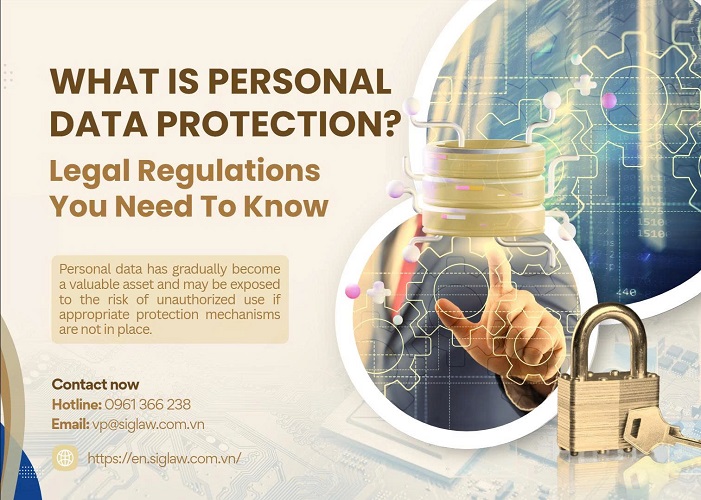
In the context of rapid digital transformation across all sectors worldwide, every individual’s personal data is being continuously collected, stored, and processed. Personal data has gradually become a valuable asset and may be exposed to the risk of unauthorized use if appropriate protection mechanisms are not in place.
To safeguard citizens’ rights and interests, the Vietnamese Government has issued legal documents governing personal data protection activities. In this article, Siglaw Firm will help clients better understand the concept of personal data protection and the current legal regulations in this field.
Personal Data Protection
What is personal data?
According to Clause 1, Article 2 of the Law on Personal Data Protection 2025, personal data refers to data in digital form or other information relating to a specific individual that can be used to identify that individual. Under this provision, personal data is classified into two categories: basic personal data and sensitive personal data.
What is personal data protection?
Clause 4, Article 2 of the Law on Personal Data Protection provides the following definition:
“Personal data protection means the use of human resources, means, and measures by agencies, organizations, and individuals to prevent and combat activities that infringe upon personal data.”
Simply put, personal data protection refers to the proactive implementation of necessary measures to protect one’s private information, thereby preventing others from illegally collecting, using, disclosing, or exploiting such information.
Why is personal data protection important?
Protecting personal data is not only a right but also an essential necessity for every individual. So why is personal data protection becoming increasingly important?
First, personal data is considered a private asset closely associated with each individual. The collection, use, or infringement of personal information without the data subject’s consent directly affects that person’s privacy rights and other lawful rights and interests.
Second, personal data protection helps minimize the risk of information theft, data leakage, or unauthorized access by malicious actors. As a result, individuals can avoid having their information exploited for illegal activities such as fraud, identity theft, or asset misappropriation.
Third, personal data protection contributes to building a secure digital environment, enhancing public trust in online services, and promoting effective and sustainable digital transformation.
Latest Legal Regulations on Personal Data Protection
To ensure effective personal data protection, the Vietnamese Government has issued legal documents regulating the collection, storage, and use of personal data.
Currently, two key legal instruments are in force: the Law on Personal Data Protection 2025 and Decree No. 356/2025/ND-CP detailing and guiding the implementation of certain provisions of this Law.
Law on Personal Data Protection 2025
This is Vietnam’s first comprehensive legal instrument governing personal data protection and processing activities. The Law was enacted to safeguard individuals’ privacy rights, enhance the responsibilities of authorities, organizations, and enterprises in collecting, storing, using, and sharing personal data, and strengthen measures to prevent and handle personal data infringements.
Accordingly, the Law on Personal Data Protection 2025 sets out specific regulations on the following matters:
- Principles of personal data protection;
- Rights and obligations of personal data subjects;
- Responsibilities of parties involved in personal data processing activities;
- Measures to ensure personal data security; and
- Inspection, assessment, and sanctions against violations in the field of personal data protection.
Decree No. 356/2025/ND-CP
This Decree was issued by the Government to replace Decree No. 13/2023/ND-CP and provides detailed regulations and guidance on the implementation of certain provisions of the Law on Personal Data Protection 2025.
The Decree clarifies the provisions of the Law and provides a unified legal basis for authorities and organizations in the protection and processing of personal data. Specifically, Decree No. 356/2025/ND-CP provides detailed regulations on:
- The list of basic personal data and sensitive personal data;
- Responsibilities of parties participating in personal data processing activities;
- Regulations on personal data processing service businesses;
- Procedures for cross-border transfer of personal data; and
- Measures to ensure the security and management of personal data.
Personal data protection is not only an individual’s right but also a responsibility of organizations and enterprises in the digital era. Understanding legal regulations and proactively implementing security measures will help minimize risks and protect everyone’s privacy rights.
The above information constitutes Siglaw Firm’s preliminary legal advice regarding personal data protection and the relevant legal regulations. Should you require legal consultation on personal data protection or any other legal matters, please contact us:
Head Office (Hanoi): No. 44/A32 – NV13, Area A Geleximco, Le Trong Tan Street, Tay Mo Ward, Hanoi, Vietnam.
Southern Branch: No. 103 – 105 Nguyen Dinh Chieu Street, Xuan Hoa Ward, Ho Chi Minh City, Vietnam.
Central Branch: VIFC DN – ICT Building, Software Park No. 2, Nhu Nguyet Street, Hai Chau Ward, Da Nang, Vietnam.
Email: vp@siglaw.com.vn
Hotline: (+84) 961 366 238
Facebook: https://www.facebook.com/hangluatSiglaw